


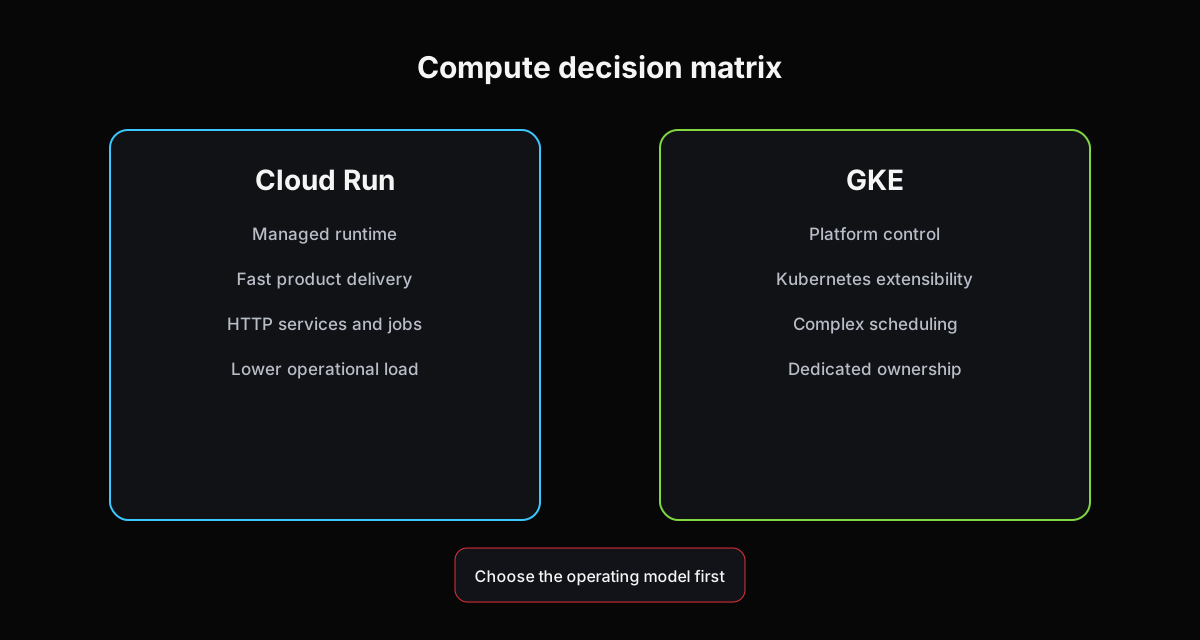
Cloud Run and GKE are both excellent compute platforms. The wrong choice usually comes from asking the wrong question. The question is not "which service is more powerful?" The question is "which operational model fits this product right now?"
Default to Cloud Run when speed matters
Cloud Run removes most cluster operations. For APIs, workers, webhooks and internal services, that is often the right default. Teams can ship quickly while still getting autoscaling, revisions, traffic splitting and IAM integration.
| Signal | Cloud Run fit | GKE fit |
|---|---|---|
| Team size | Small team without dedicated platform engineers | Dedicated platform ownership exists |
| Workload | HTTP services, jobs, event workers | Complex mesh, custom controllers, long-running systems |
| Operations | Prefer managed runtime and simple deploys | Need deep control over networking and scheduling |
Choose GKE when platform control is the product requirement
GKE is the stronger option when the platform needs Kubernetes-native extensibility: operators, service mesh, specialized networking, custom admission controls or multi-service scheduling behavior. It is also a better fit when the organization already has Kubernetes skill and clear ownership.
Cost is not only the invoice
Cloud Run can look more expensive per unit of compute in some sustained workloads. GKE can look cheaper until the cost of cluster operations, upgrades, security patching and platform engineering is included. Use total operational cost, not raw compute price.
A practical rule
Start on Cloud Run unless you can name the Kubernetes capability you need and the person or team who will own it. Move to GKE when platform control becomes a real requirement, not a theoretical future.
Final check
The best compute choice is the one your team can operate calmly. Cloud Run is often the better product engineering default. GKE is powerful when the organization is ready to treat the platform itself as a serious engineering system.