


Scoped diagnostics
Support sees tenant context without collapsing isolation boundaries.
Provider-side trust layer
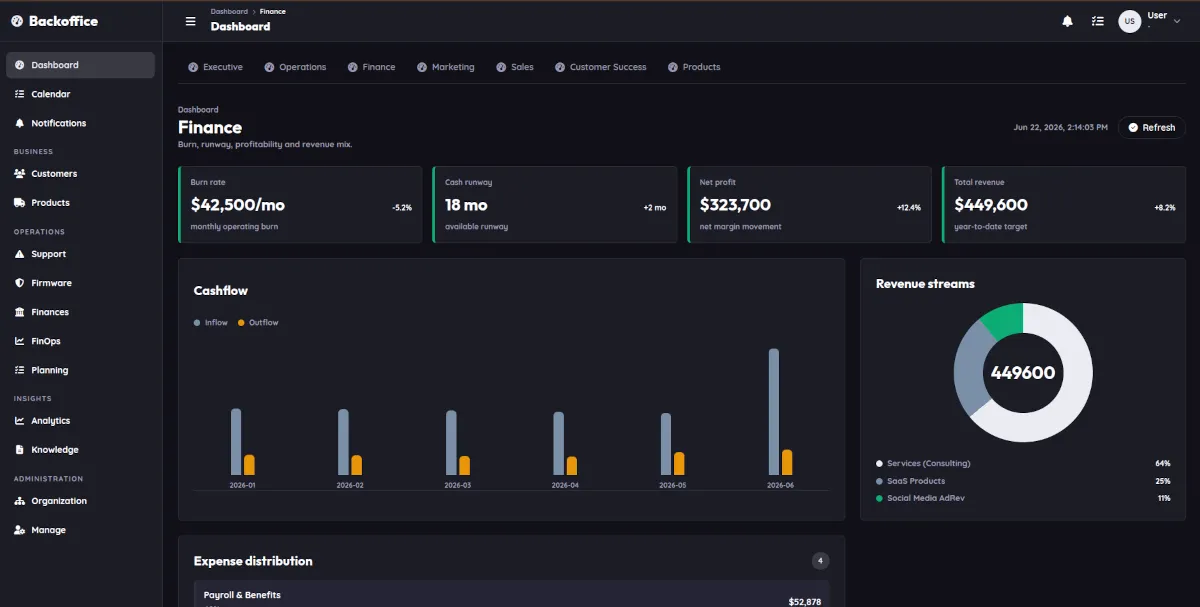
Backoffice was crafted for support engineers, SRE, compliance and billing operations. It turns internal interventions into scoped, approved and auditable workflows instead of scripts and direct database access.
Introduction
The provider needed speed during incidents without weakening tenant isolation or losing evidence about who changed what and why.
The interface favors calm operational density: risk lanes, accountable actions and clear next moves during incidents.
Features
We separated provider-facing workflows from tenant-facing domains and made privileged actions explicit, reviewable and reversible where possible.
Support sees tenant context without collapsing isolation boundaries.
Replay is routed through controlled labs, approvals and evidence records.
Policy and rule changes use segmentation, versions and audit history.
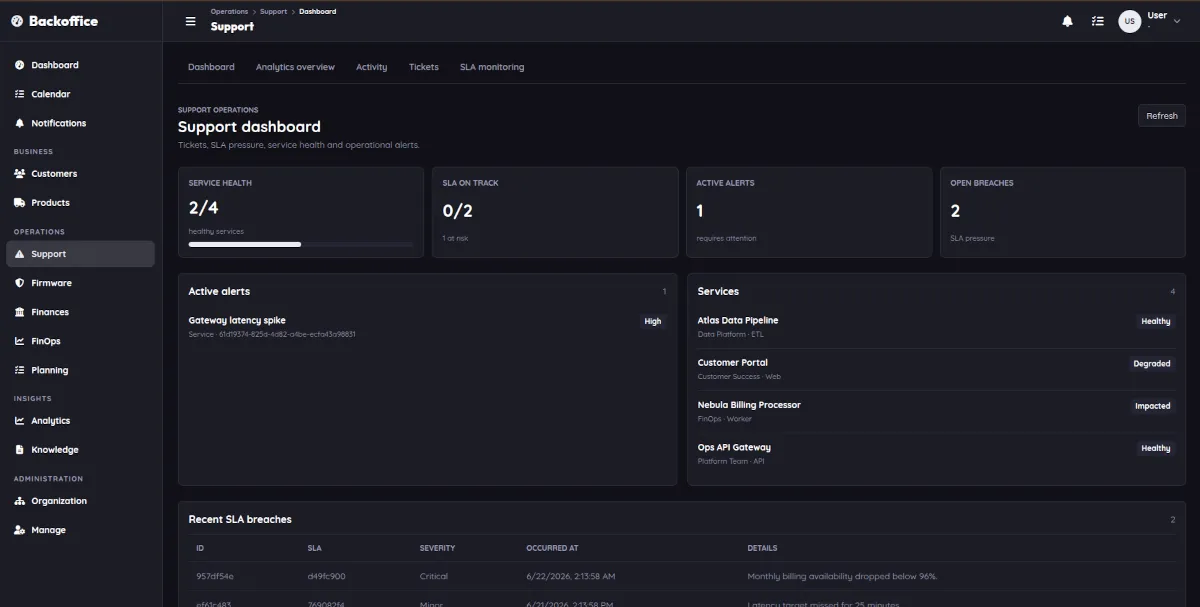
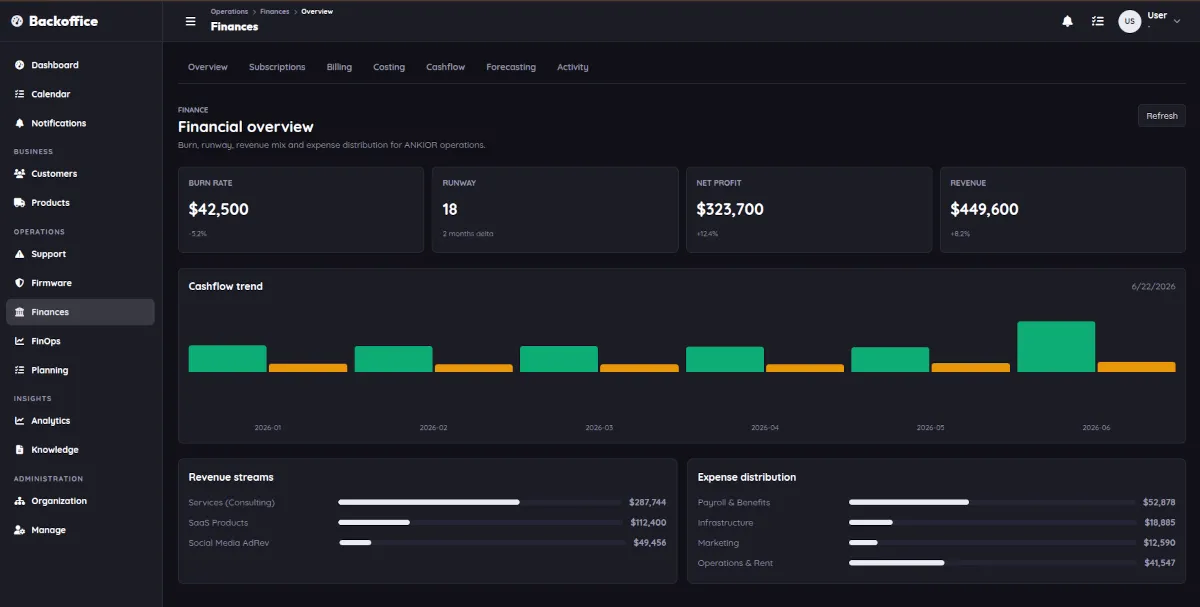
Health, incidents, integrations and billing risks are prioritized in one provider view.
The system keeps clean domain events and audit context for assisted workflows.
SRE sees degraded domains, tenant impact and SLA risk first.
Evidence, traces and allowed actions stay attached to one case.
Operators compare versions, risk segments and approval state before rollout.
Challenges
Without a backoffice, diagnostics, replay, support and rollout control become manual procedures with unclear accountability.
Support needed enough context to diagnose issues without crossing customer boundaries.
Every internal intervention had to be scoped, approved and visible after the fact.
The interface had to help teams move quickly without falling back to scripts or direct database access.
Without a backoffice, diagnostics, replay, support and rollout control become manual procedures with unclear accountability.
SRE sees degraded domains, tenant impact and SLA risk first.
Evidence, traces and allowed actions stay attached to one case.
Technology stack
A provider-facing web platform over domain APIs, audit services, approval workflows and operational dashboards for cross-domain reliability.
Preview
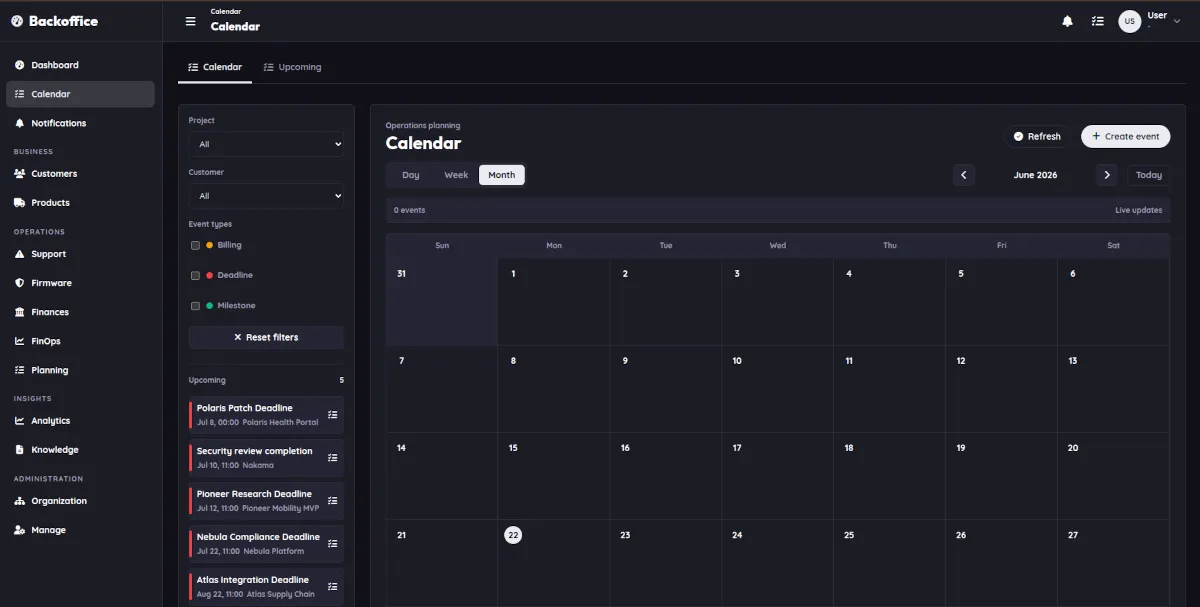
Selected product screens showing information architecture, UX decisions and real system surfaces.
Japonics
Backoffice demonstrates provider-grade craft: speed, restraint and accountability in one operating layer.