

Profile types
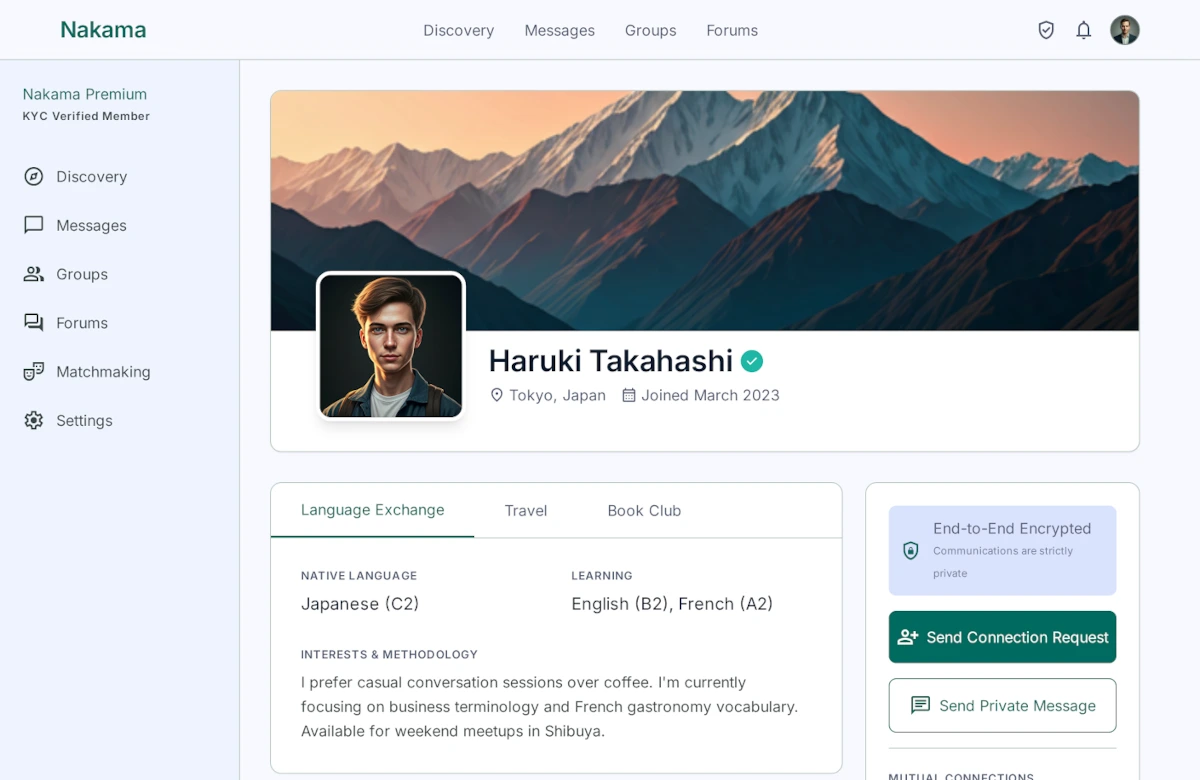
Intent is structured by profile type instead of buried in a bio.
Introduction
People will not build meaningful connections if spam, fake accounts and ranking games dominate the experience.
The UX feels intentional rather than viral: fewer vanity signals, more meaningful context before contact.
Features
We designed trust as architecture: verification, payment gate, profile types, privacy boundaries and deterministic discovery.
Intent is structured by profile type instead of buried in a bio.
Search favors explicit fit over popularity ranking.
No ads, no selling visibility, no public pressure by default.
Small organizers can run groups without meetup-style burden.
The system keeps clean domain events and audit context for assisted workflows.
Users express different sides of themselves through separate profile types.
Language, interests, distance and availability drive matches.
Organizers manage small communities without ad-driven mechanics.
Challenges
Generic social platforms optimize reach, not safe discovery and durable communities.
Profiles, discovery and messaging needed strict visibility boundaries by default.
The system had to reduce fake accounts and spam without turning onboarding into a wall.
Matching had to favor explicit intent over popularity and ad-driven ranking.
Generic social platforms optimize reach, not safe discovery and durable communities.
Users express different sides of themselves through separate profile types.
Language, interests, distance and availability drive matches.
Technology stack
Nakama combines identity, subscription, profile schemas, discovery indexing, messaging, groups and privacy controls in a modular platform.
Preview
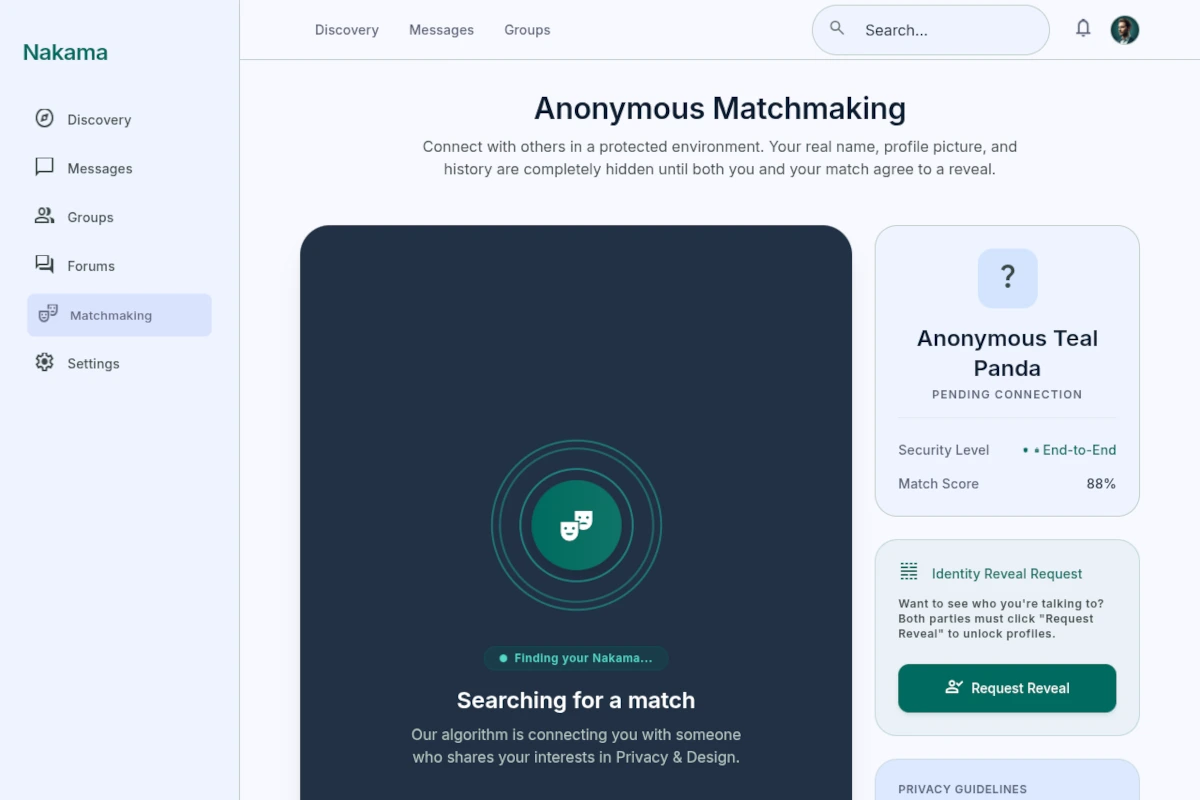
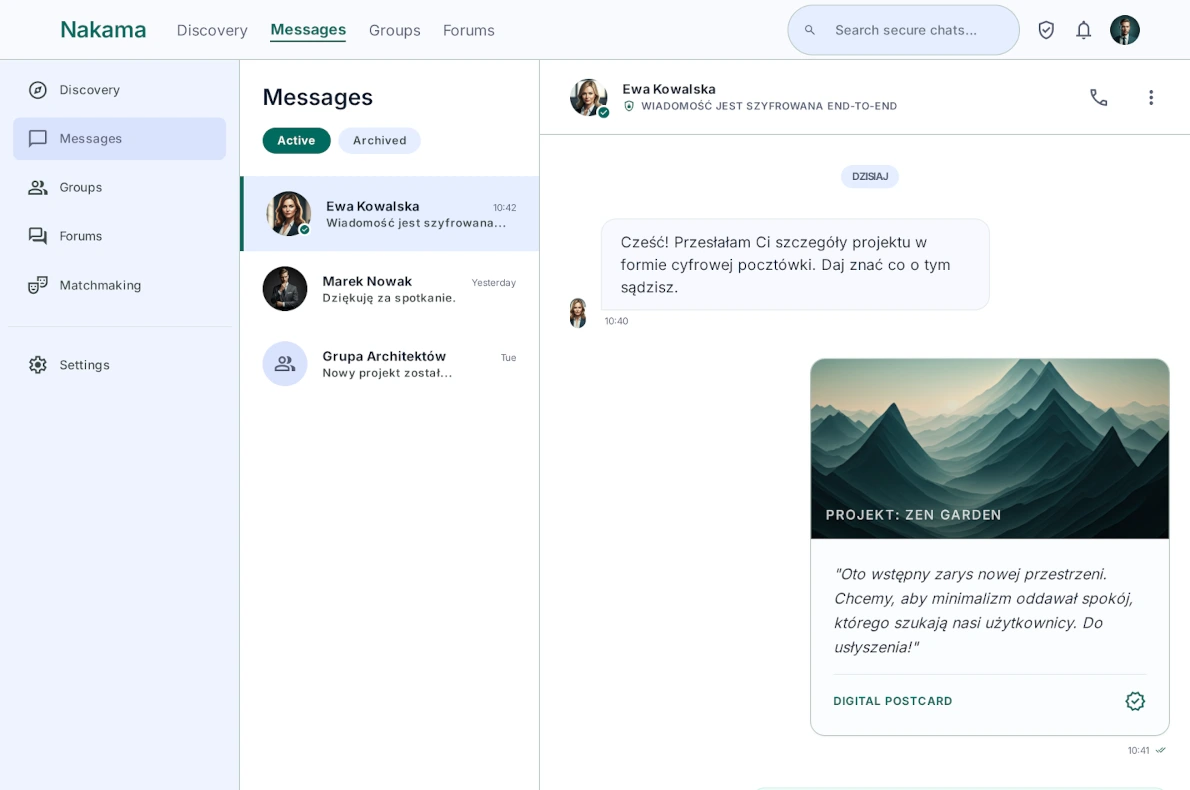
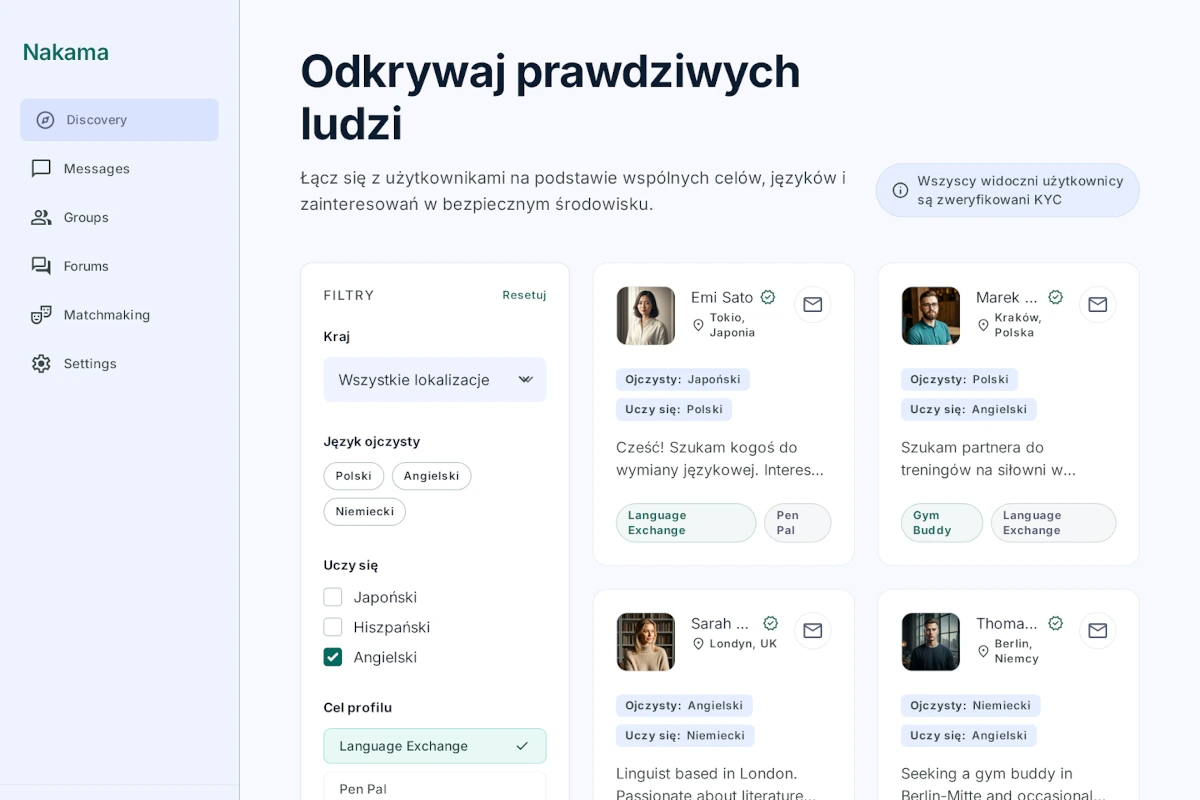
Selected product screens showing information architecture, UX decisions and real system surfaces.
Japonics
Nakama shows Japonics' craft in product ethics, privacy and community UX.