


Daily operating rhythm
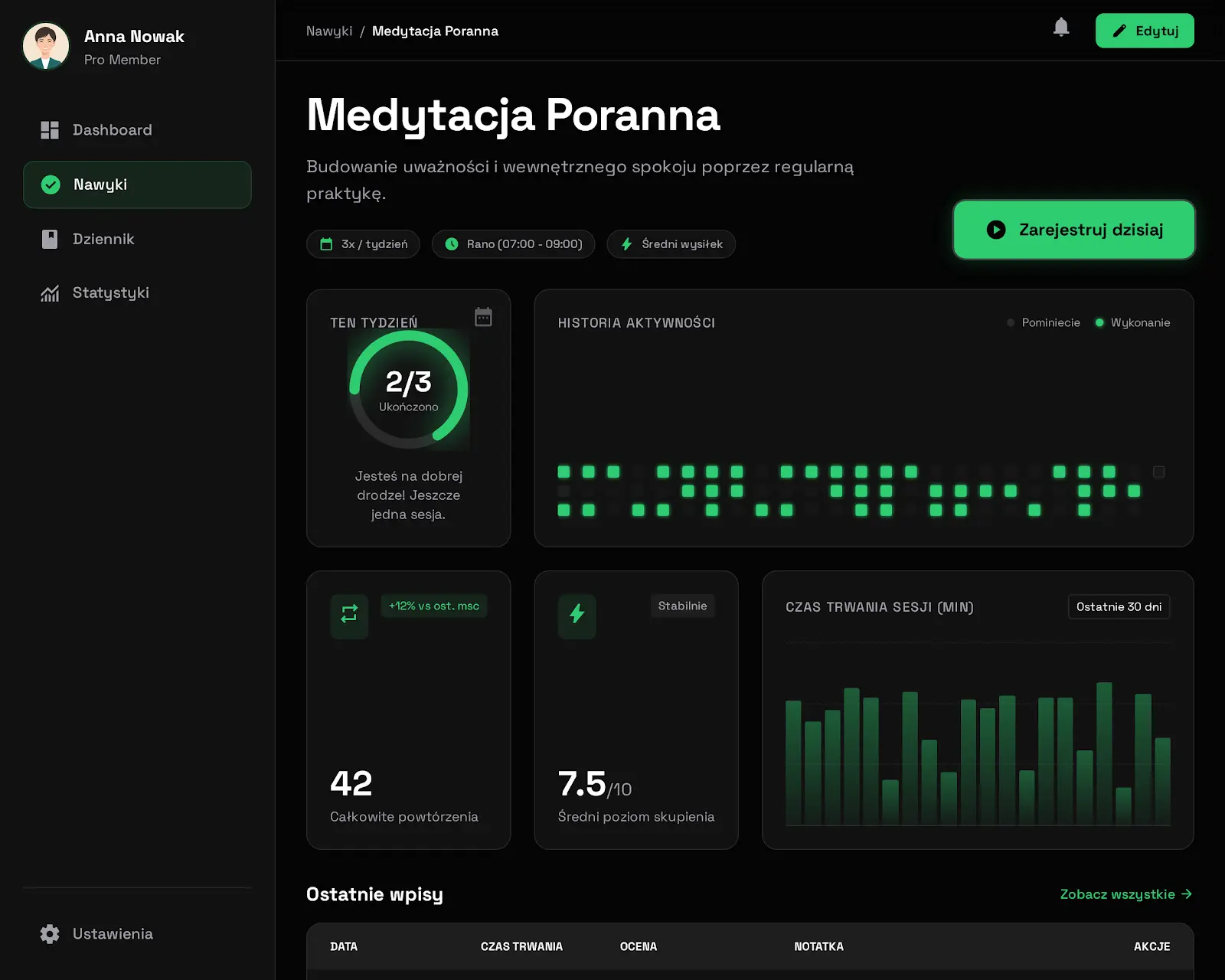
Schedule, habits and activities create evidence for retrospection.
Introduction
Most self-development tools either require users to build the system themselves or punish them with shallow streak mechanics.
The UX is intentionally calm: missed habits are data, not failure; progress is trend, not perfection.
Features
We designed Sensei around cross-module signals and non-judging progress instead of isolated checklists.
Schedule, habits and activities create evidence for retrospection.
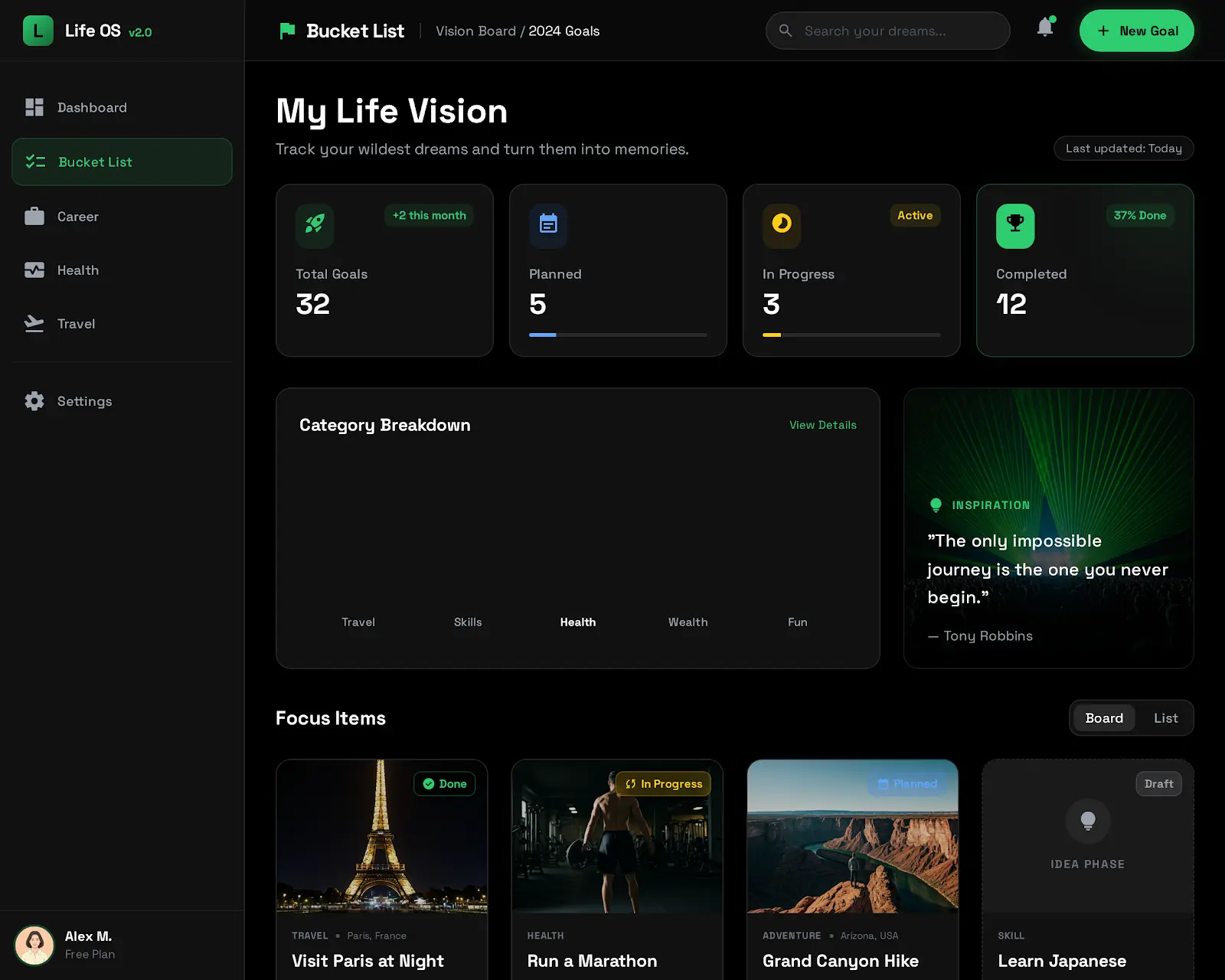
Milestones connect to actual behavior, learning and effort.
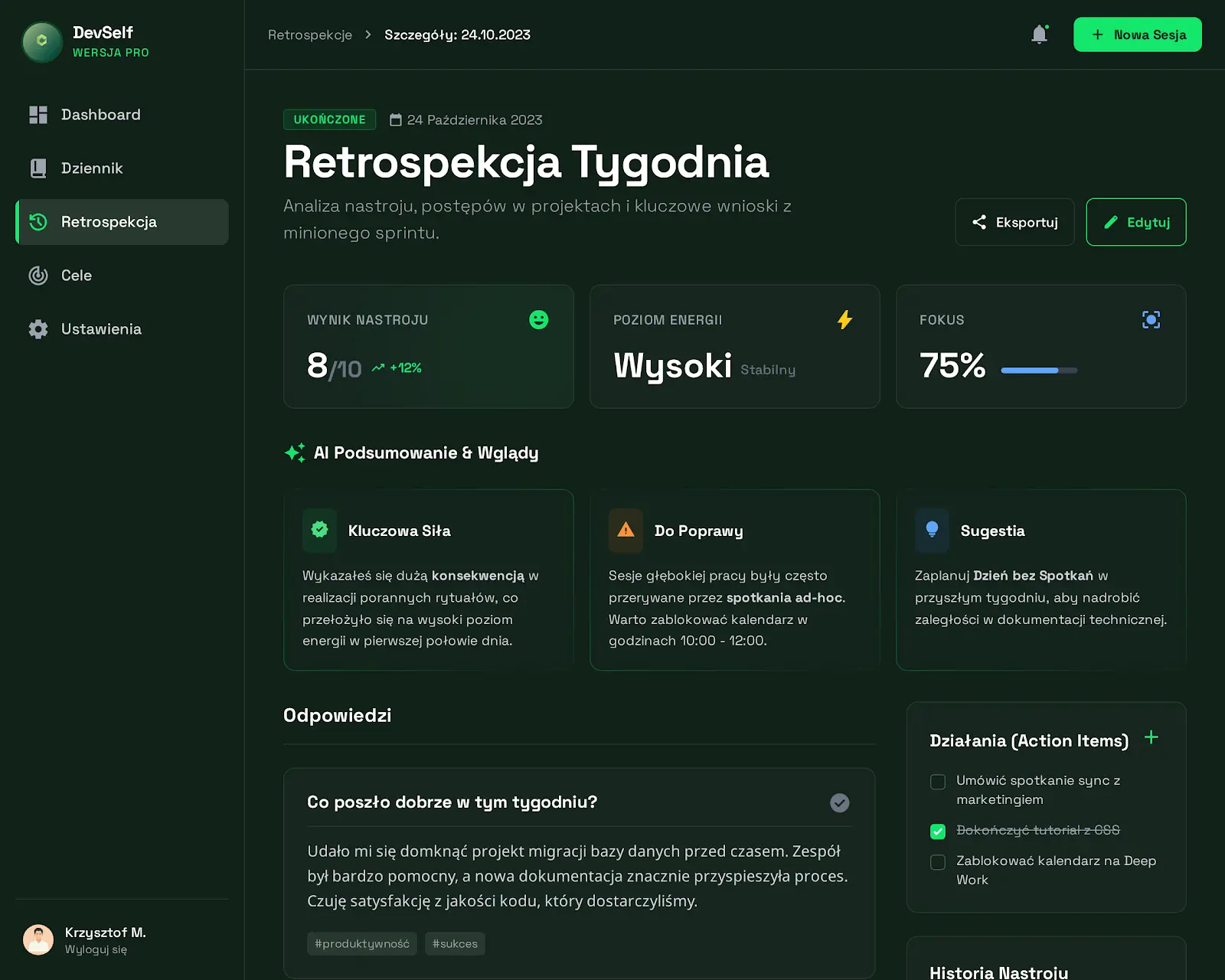
Journaling prompts can use behavioral data without judging the user.
Travel, memories and relationships remain part of development.
Prompts and summaries can use behavior signals without judging the user.
Plan, goals and habits meet before the day starts.
Completion and reflection feed the next planning cycle.
Books and materials turn into recall and next actions.
Challenges
Planning, habits, notes, books, goals and retrospection are usually split across unrelated apps.
Progress had to feel supportive, not like another streak machine.
Planning, habits, learning and reflection had to connect without overwhelming the user.
Journal and behavioral data required a non-judging privacy posture.
Planning, habits, notes, books, goals and retrospection are usually split across unrelated apps.
Plan, goals and habits meet before the day starts.
Completion and reflection feed the next planning cycle.
Technology stack
Sensei is organized into productivity, self-development, learning, journey and communication domains with shared identity and notification foundations.
Preview
Selected product screens showing information architecture, UX decisions and real system surfaces.
Japonics
Sensei is a premium study in personal-domain product architecture and humane UX.