

Aid point registry
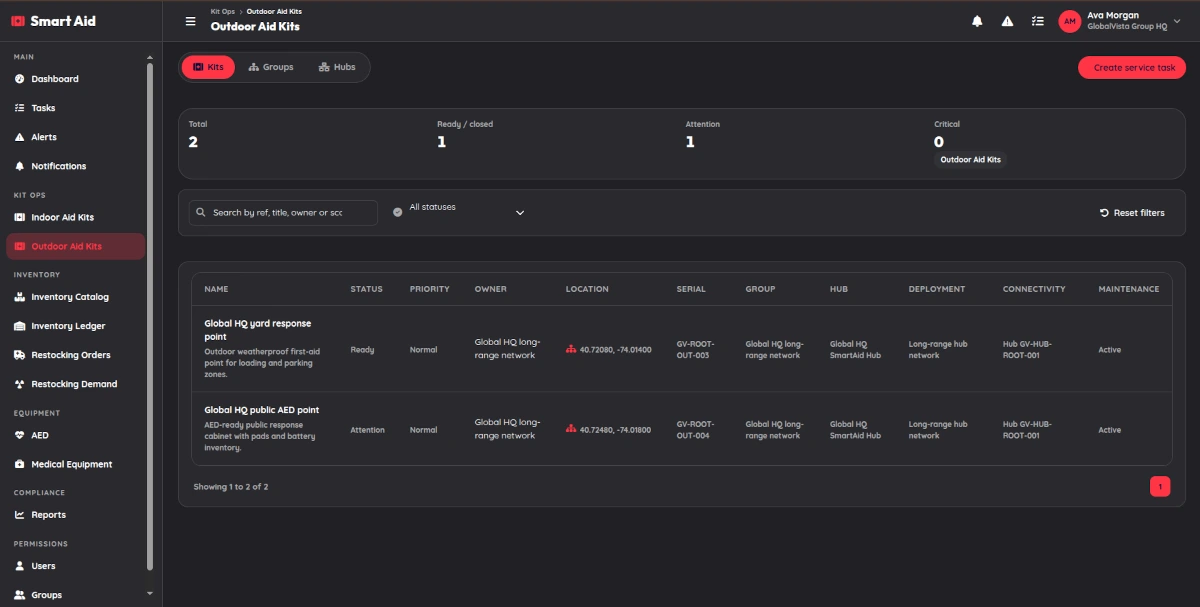
Every point has location, responsibility, stock and access context.
First aid as an operating network
We crafted SmartAid as a bridge between physical medical equipment, mobile response flows, readiness checks and replenishment signals.
Introduction
A first-aid point is only useful if the organization knows it exists, is stocked, is accessible and has a clear post-use process.
The UX separates emergency use from administration: fast action in the field, deep traceability after the event.
Features
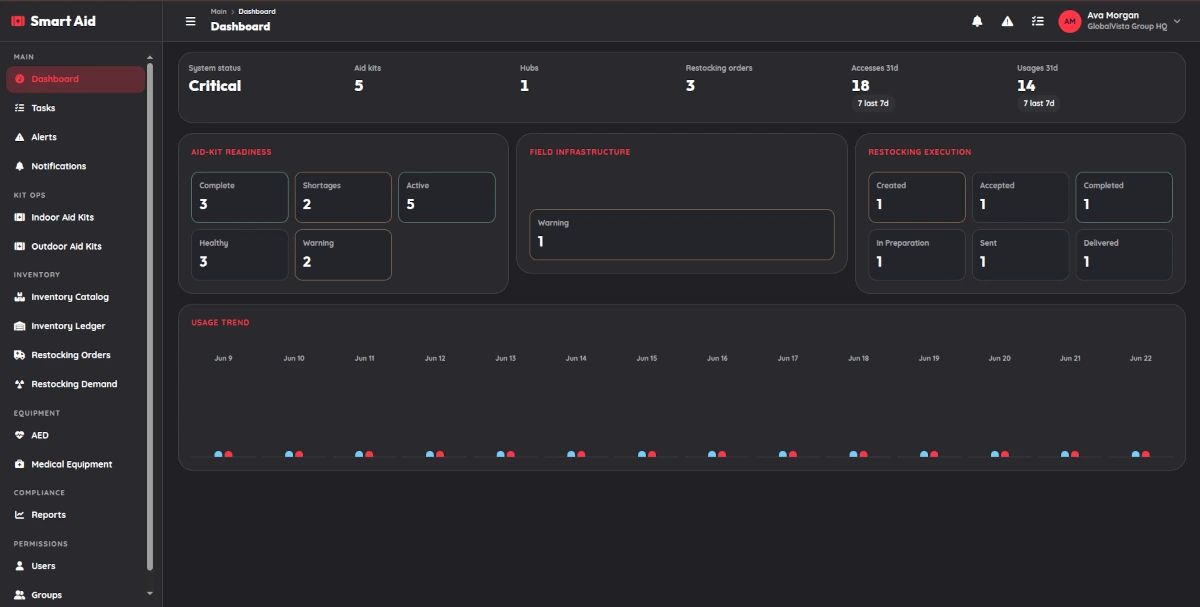
We modeled readiness as a living state connected to locations, equipment, stock, usage and replenishment.
Every point has location, responsibility, stock and access context.
During response, the flow captures use without overloading responders.
Missing, expired and consumed items lower readiness automatically.
SmartAid feeds AssetsManager with demand and restocking context.
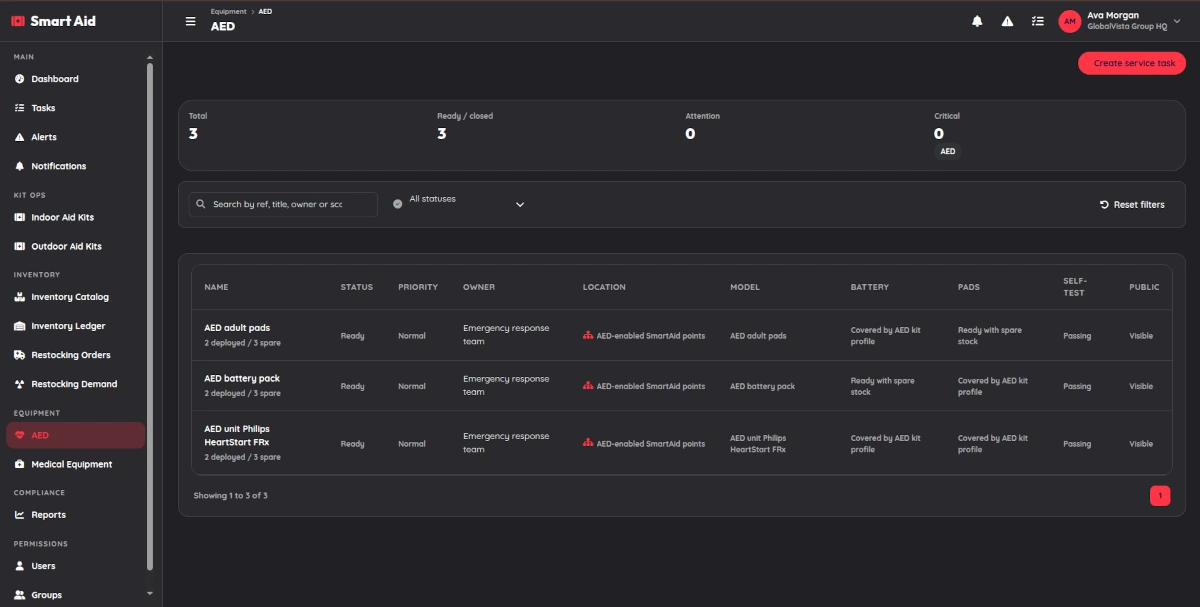
AED state, cabinet context and future hardware signals can feed the readiness model.
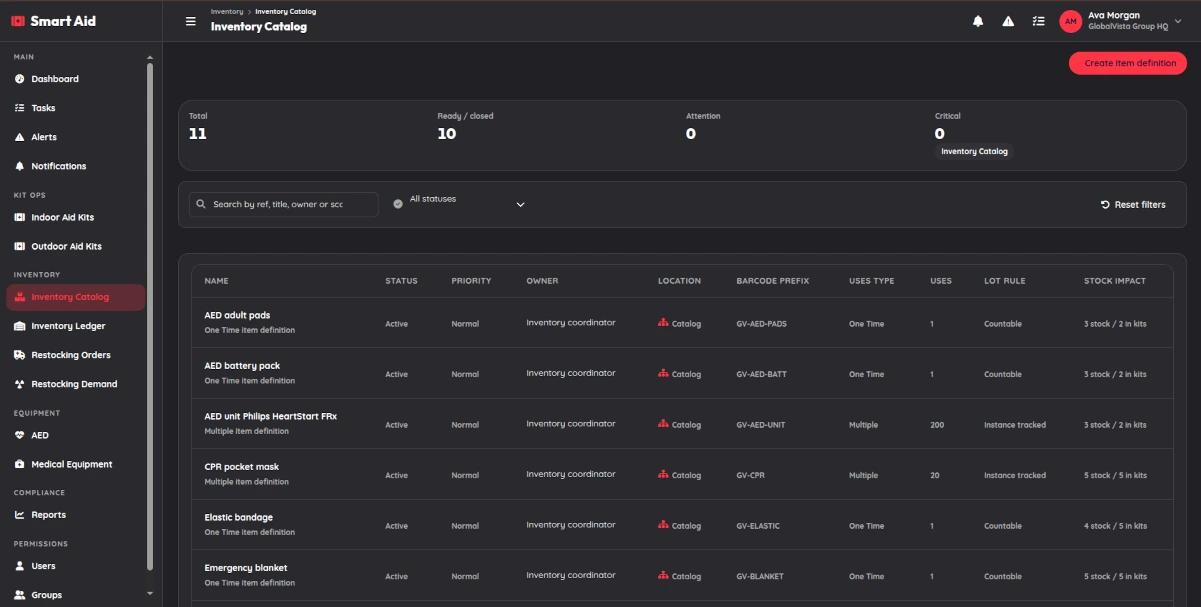
Restock demand can move from field usage into inventory and supplier workflows.
Usage, inspection and location signals are prepared for assisted prioritization without replacing human control.
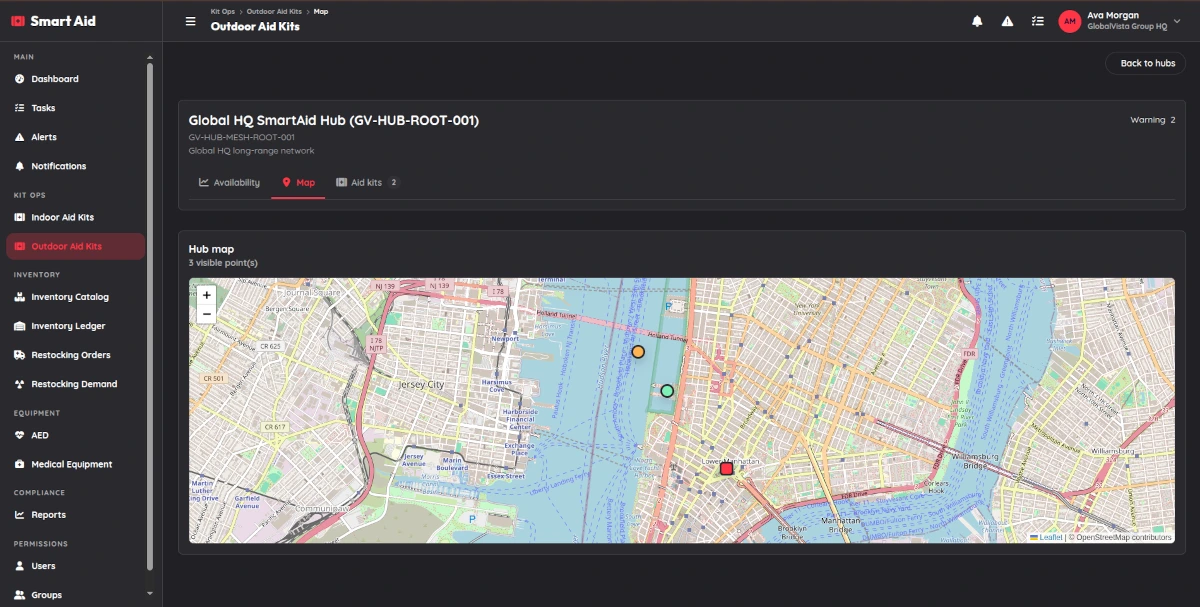
Locations show usable, degraded and critical aid points at a glance.
Challenges
Organizations often discover missing stock or unavailable equipment only after a response starts.
Field flows had to stay usable where connectivity is unreliable.
AED, cabinet and kit signals needed a shared readiness model.
Usage events had to become restock demand without losing evidence.
Emergency flows had to stay calm and minimal.
Many aid points needed one understandable readiness language.
A response had to create restock, review and closure work.
Technology stack
SmartAid combines web and mobile flows, asset readiness, usage events and supply integrations across a tenant-aware platform.
Preview
Selected product screens showing information architecture, UX decisions and real system surfaces.
Japonics
SmartAid demonstrates how product craft can support high-pressure physical workflows.